Ready-to-install modular build
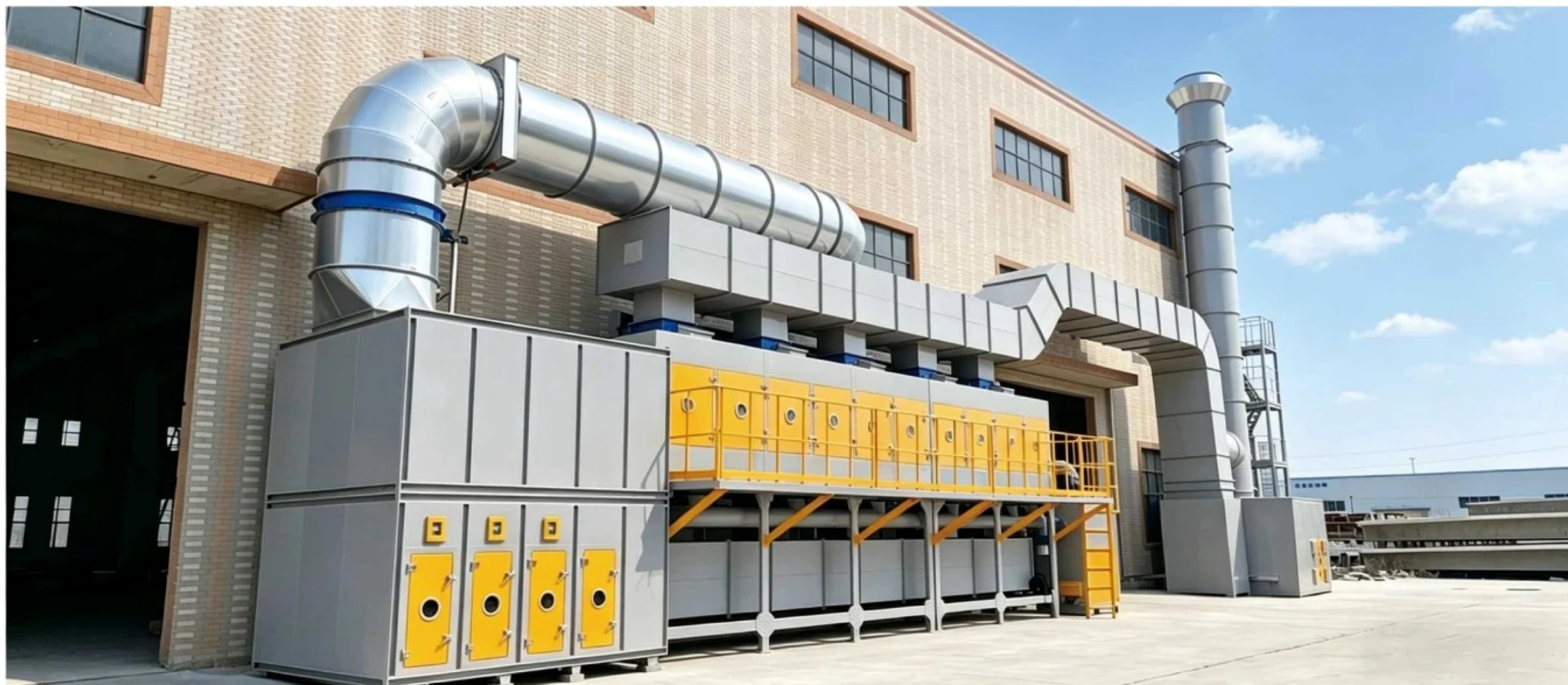
The adsorption, catalytic oxidation and control sections are factory integrated for fast positioning and commissioning on site.

Integrated adsorption, desorption and catalytic oxidation for high-volume, low-concentration industrial VOC exhaust.
The system treats ambient-temperature organic exhaust containing benzene compounds, ketones, alcohols, ethers and mixed solvents. It is particularly suited to applications with large air volumes and low to medium VOC concentrations.
Dry filtration protects the adsorption media. Activated carbon captures and concentrates VOCs, controlled hot air regenerates the saturated bed, and the concentrated stream is then purified through flameless catalytic oxidation. Recovered heat is circulated back into the process.
The adsorption, catalytic oxidation and control sections are factory integrated for fast positioning and commissioning on site.
Adsorption modules can be combined around the required exhaust-air volume, production schedule and available installation space.
Adsorbed VOCs are released during controlled desorption, allowing the activated carbon media to return to service.
Concentrating the VOC stream before oxidation reduces the volume handled by the catalytic stage, while recovered heat supports desorption.
The operating sequence below has been rebuilt as native English web content from the supplied technical catalogue.
G4 / F5 / F7 pre-filtration removes fine overspray and dust before the adsorption stage.
Process exhaust passes through activated-carbon beds where VOCs are captured and concentrated.
A saturated bed is isolated and heated, releasing the concentrated organic compounds and regenerating the carbon.
The concentrated stream is oxidised over a catalyst at a lower temperature than direct thermal combustion, without an open flame.
Recovered thermal energy is recirculated to support desorption and oxidation, improving overall energy efficiency.
Illustrative values extracted from the supplied control diagram. Final settings depend on VOC composition, concentration and project design.
Suitable for treating organic exhaust from production lines using solvent-based coatings, inks, adhesives and related chemical materials.
Accurate sizing depends on verified exhaust conditions and the production schedule rather than nominal fan capacity alone.
Provide solvent composition, normal and peak concentration, temperature, humidity, dust, paint mist and any materials that may affect activated carbon or the catalyst.
State minimum, normal and peak airflow, production hours, batch changes, cleaning cycles and how often simultaneous exhaust points operate.
Confirm available heating energy, required redundancy, expected bed switching and the access needed for carbon and catalyst maintenance.
Clarify controls, ductwork, pretreatment, installation guidance, commissioning, operator training, OEM requirements and spare-parts support.
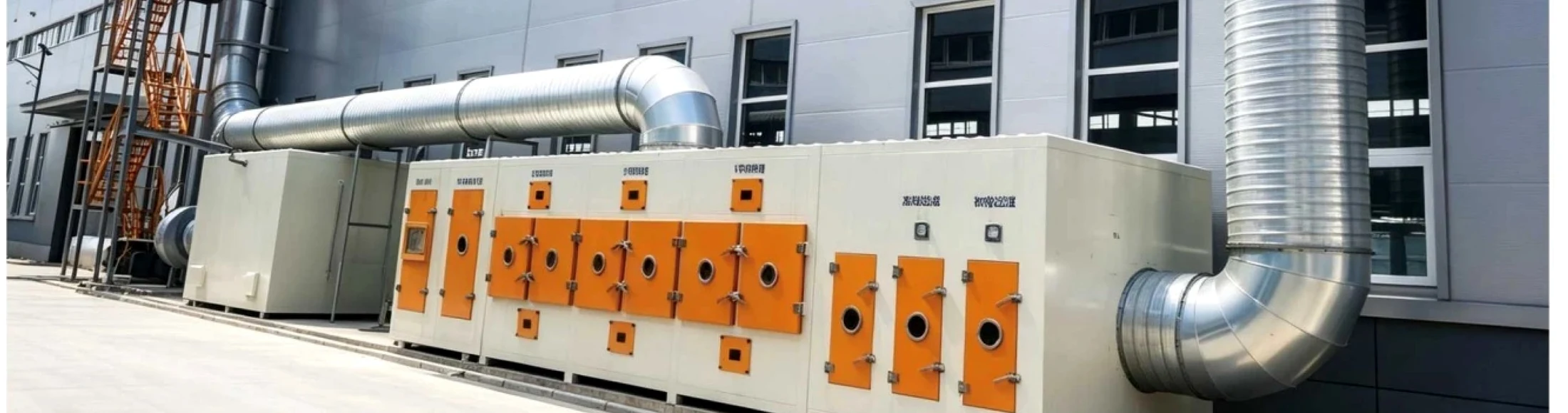
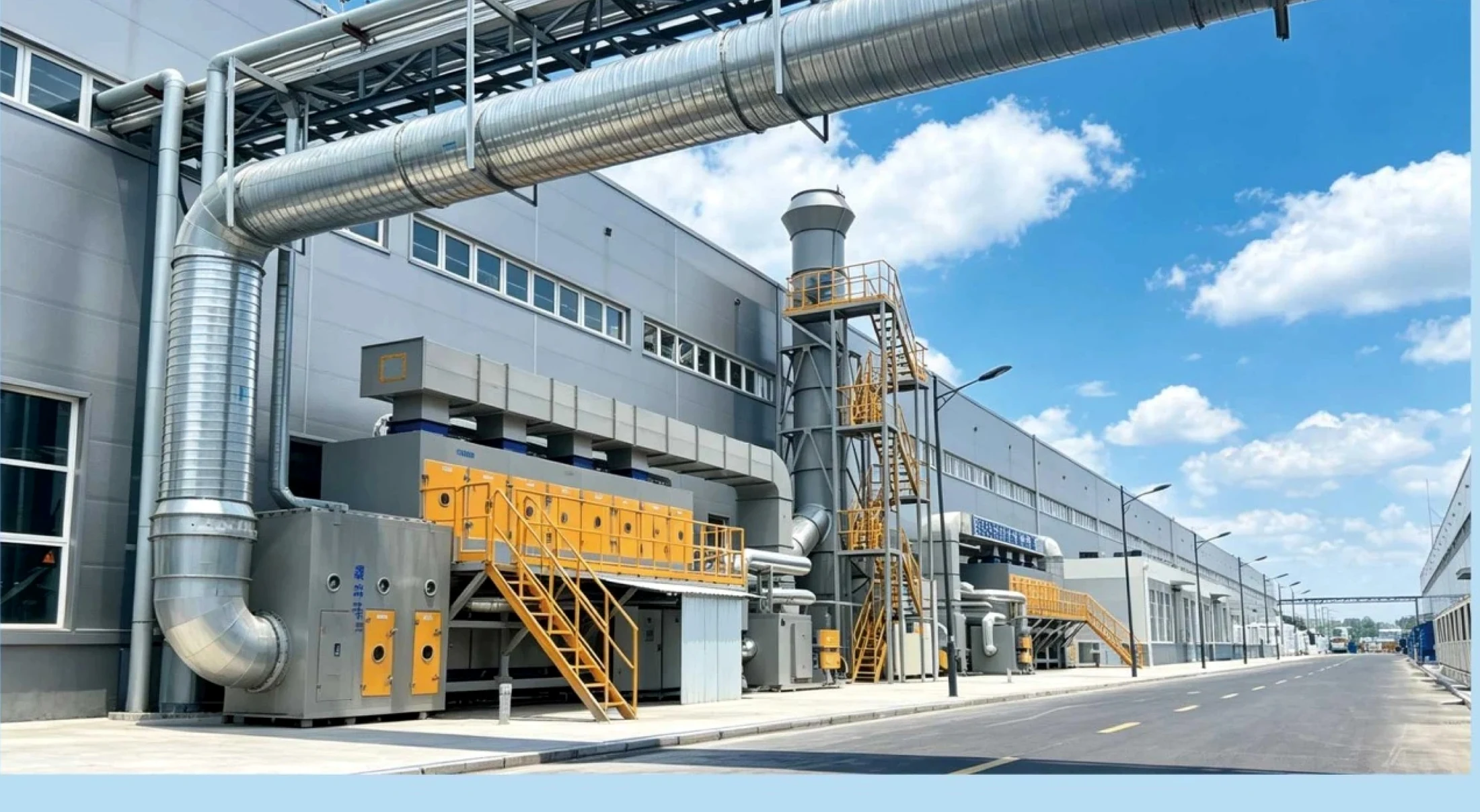
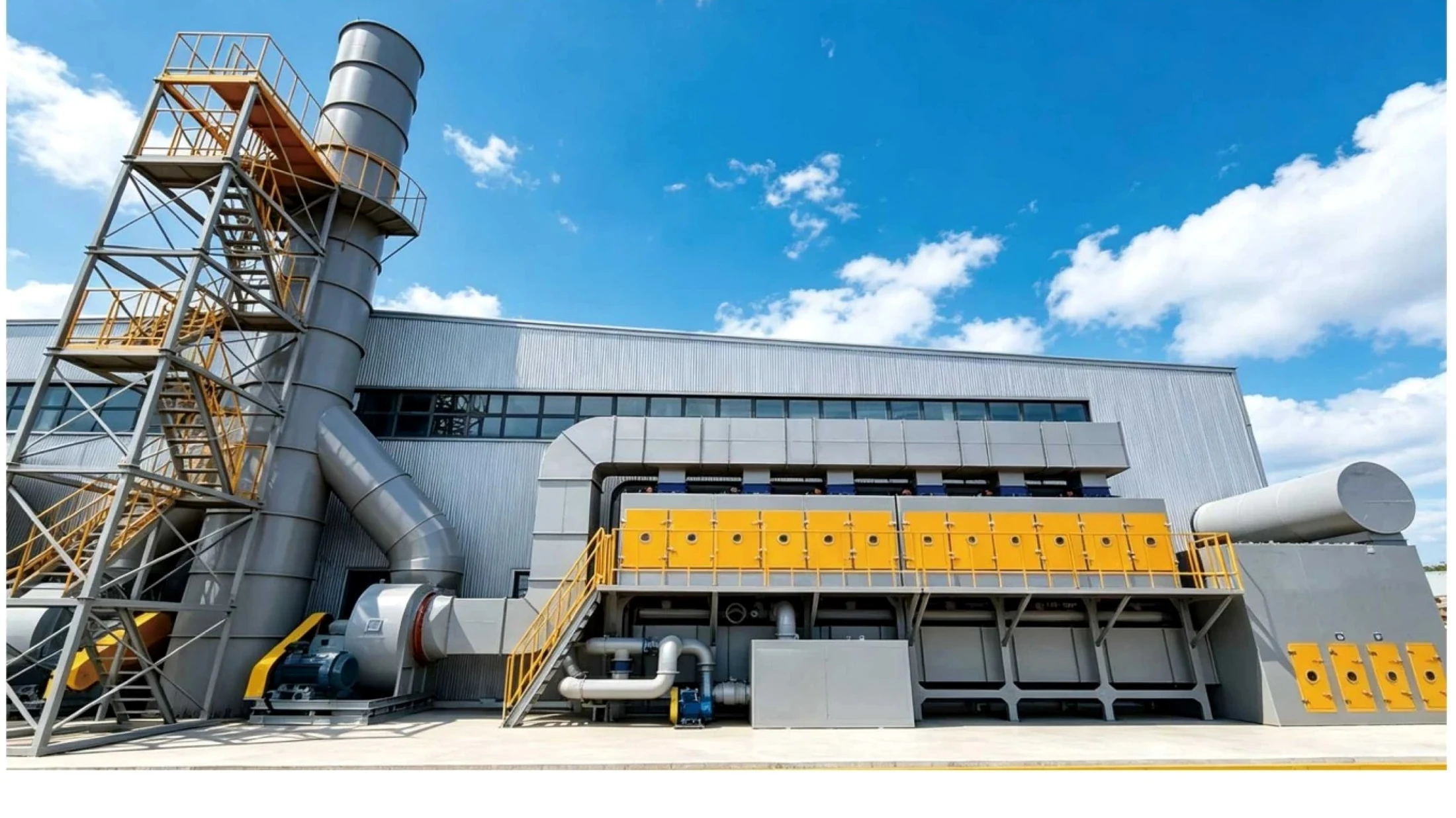
Equipment photographs have been extracted as clean product assets; no translated brochure pages are embedded.
Our engineering team will recommend the adsorption capacity, module arrangement, pre-treatment and catalytic oxidation configuration for your production line.
Discuss your project →